Showing posts with label Advocacy. Show all posts

Monday, September 17, 2012

The Farm Bill Can Make the Difference


The number of Vermonters struggling with hunger has finally started to level off after a decade of steady increase. According to recent data released in September by the U.S. Department of Agriculture (USDA) in its annual report on food insecurity, 12.8% of Vermont households do not have consistent access to enough nutritious food – about 1 in 8 households, down from 13.8% last year. 

Vermonters who continue to be out of work or underemployed due to the recession may have been buffered from hunger by participating in 3SquaresVT (formerly food stamps and known nationally as SNAP), which provides them with more money for food. The program is currently being debated in Congress as part of the Farm Bill. If the cuts in SNAP that have been proposed by the House Agriculture Committee are voted into law, many Vermonters will lose this important food resource. The most vulnerable citizens depend on this nutrition program: the average SNAP household has an income of only 57% of the poverty level and 84% of SNAP benefits go to households with children, the elderly, or those with disabilities.

Seniors and children are especially vulnerable due to the devastating effects of hunger. Research has shown that seniors have higher rates of illness and disability with higher costs for dependent care if they do not have access to adequate food. Children living in food insecure households are in poorer health and have significantly more trouble in school—this costs more in the long run as society pays increased health care and education costs. SNAP works like a vaccine, preventing illness and improving health outcomes for those who participate.
SNAP is doing its job in Vermont, reducing hunger and stimulating the economy. Cutting the program now would be an injustice as well as bad economic sense. Now is the time for Congress to strengthen SNAP, to protect children and seniors from the devastating effects of hunger. The recommendations developed by the Farm Bill Nutrition Coalition of Vermont, convened by Hunger Free Vermont, would help ensure that we provide adequate food to all who need it.

Tuesday, September 4, 2012

Join the Hunger Free Vermont Hike for Hunger!

It is hard to believe that it is the beginning of September already! Now that school is back in session, our Child Nutrition Advocacy Team is hard at work checking in with food service directors to make sure that they have what they need to implement new nutritional standards from the USDA. As the weather slowly starts to change, we are gearing up for our 16th annual Hike for Hunger, which is just under a month away! In the past, we have asked schools and community groups to host their own Hikes for Hunger in their communities. Schools would pick a date and location and hike to raise awareness about hunger, and funds for Hunger Free Vermont. However, we would often get phone calls and inquiries from community members wondering when they could join the hike. We wanted to make a hike event that everyone could easily get involved in and that is why this year we are hosting two large Hikes for Hunger- one in Northern Vermont and one in Southern Vermont.

Participants in a previous Hike for Hunger.

The Hikes not only help raise money for our programs that feed children, neighbors, and families, and teach communities to cook, but they bring awareness to the issues of hunger and malnutrition. We hope you will join us at one of the Hikes and stand in solidarity with the 90,000 Vermonters who struggle to get enough nutritious food on a consistent basis.
The Northern Vermont Hike for Hunger will be 9/22 at Catamount Outdoor Family Center in Williston, and the Southern Vermont Hike for Hunger will be 10/13 at Grafton Ponds in Grafton. Check-in will start at 10am and the hike will start at 11am. Each Hike will have a 3 mile and 1.5 mile loop and will be followed by a community celebration with food from our generous sponsors, prizes for top fundraisers, and t-shirts and giveaway bags for each participant. We hope you will join us at one of the hikes! You can register, or find more information, online at www.hungerfreevt.org/do/hike-for-hunger .

Hunger Free Vermont staff and board members during last year's Hike for Hunger.

We are so grateful to all of our generous sponsors who are making the Hike for Hunger possible this year: August First, Bluebird Barbecue, Catamount Outdoor Family Center, City Market, Climb High, C&S Wholesale Grocers, Grafton Ponds Outdoor Center, Hampton Direct, Jane’s Trust, Lake Champlain Regional Chamber of Commerce, Langrock, Sperry & Wool, LLP, LinCo Entertainment, Long Trail Brewing Company, National Life Group Foundation, Panera Bread, The Point, Select Design, and Spike Advertising.

Thursday, July 12, 2012

Guest Blogger: HFVT Child Nutrition Advocate, Amanda Caron, on the importance of the Summer Food Service Program

Last school year, 37,000 children in Vermont were signed up for free or reduced-price meals– that’s 40% of all Vermont students. Every teacher, principal, or food service director I’ve met in the state has seen child hunger in his or her school – imagine, then, the risk and stress these children must face during the summer months when school meals abruptly disappear.

Thankfully, Vermont schools and other non-profits are increasingly making use of the federal Summer Food Service Program to mitigate the increased risk of hunger during summer vacation. Nationally, participation in the program is declining, as budget cuts lead to reductions in summer school and other programs where meals are often served. Vermont, however, is bucking the trend, having added 30 summer meal sites in 2012. We are now ranked 6th in the nation for providing summer nutrition for kids.

I recently visited two summer meal programs and saw their important role first-hand.

At Enosburg Elementary School students can drop in for a free breakfast starting at 8am and lunch is served at 11:30am. Between meals, School Food Service Director, Earleen Bosley, and her team lead activities related to the gardens they’ve planted in every spare green space on the school’s grounds. In addition to providing regular nutritious meals, this program provides a free and inclusive opportunity for fun, learning, and adult supervision.

Watering the garden at Enosburg Elementary!

In Brattleboro, an extensive summer meals program serving a dozen locations was at risk this year when the sponsoring organization had to pull out. Community members rallied to find a replacement sponsor, and the Windham Regional Career Center stepped forward with an innovative model: WRCC hired a half-dozen of their high school students to help prepare and deliver meals for the summer program. Now, in addition to a 12th year of summer food for Brattleboro youth, students are gaining job experience and summer income.


At Hunger Free Vermont, we realize that kids need more than good nutrition in the summer. They need opportunities to learn, be active, socialize, and they also need guidance from adults. We’re proud to work with organizations and individuals committed to meeting all of these needs year-round, and summer meal programs help them do this. As our country continues to struggle post-recession, we must continue to fight the trend and keep these programs a priority.


Friday, July 6, 2012

Guest Blogger: HFVT Community Advocacy Manager, Sarah Weisman, on Involving the Medical Community in Feeding Vermont's Children

One in five children in Vermont lives in food insecure households.  Here at Hunger Free Vermont, we work to engage professionals in all corners of the state and in all fields to work with us to end the injustice of hunger and malnutrition for these kids.  We work in schools and community centers, summer camps and after-school programs.  In our most recent efforts to reach more children, we’ve reached out to Vermont’s medical community with an online, 1-hour accredited tutorial that focuses on the impacts of childhood hunger and provides healthcare professionals with information and tools for intervention and screening of childhood food insecurity.

Why should doctors and nurses be screening kids for food insecurity?  Research shows that children living in food insecure homes have higher rates of developmental delay, emotional and physical problems, poorer health, more nutritional deficiencies, lower academic achievement, problems with social relationships, and a greater risk of becoming overweight.  The clinical setting is the perfect place to ask about food insecurity, and the American Academy of Pediatrics agrees. The AAP mission statement is, “To attain optimal physical, mental and social health and well-being for all infants, children, adolescents and young adults.”  Fulfilling the AAP mission extends the focus of the pediatric visit from medical problems into health-related social domains.  These include: access to health care, housing, food security, income security, and intimate partner violence.

Hunger Free Vermont, in partnership with The University of Vermont College of Medicine, launched “Childhood Hunger in Vermont: The Hidden Impacts on Health, Development and Wellbeing” in February.  To date, over 70 health professionals have taken the course and the number continues to grow.  We will be working with a group of medical students this fall to assess the impact the tutorial has had on the practices of the physicians who have taken it and to provide continued assistance to medical providers who are eager to incorporate screening for food insecurity into their work.

It’s always exciting to reach a new group of professionals who are poised to make a difference in the lives of hungry Vermont children.  We are so fortunate to have a community of dedicated medical professionals in our beautiful state.

You can check out the course for yourself at https://hungerfreevt.globalclassroom.us/portal. 

Wednesday, June 13, 2012

Program Director, Dorigen Keeney wins 2012 David Goldberg Award


On Friday, June 8th we were proud to cheer on our colleague, Dorigen Keeney, as she accepted the 2012 David Goldberg Child and Youth Advocacy Award from Voices for Vermont's Children.  It is an honor to work with Dorigen every day.  She is a passionate and courageous advocate who has dedicated her life to the well-being of our communities.  Below I have shared her acceptance speech which will hopefully inspire you as much as she inspires her team at Hunger Free Vermont. 

Voices for Vermont’s Children: Children Make a World of Difference
June 8, 2012

I am truly honored to be chosen by Voices for VT children for the David Goldberg award – Both because of the esteem I have for Voices – as an outstanding advocacy organization and because David Goldberg was so committed to ending hunger and improving nutrition. As I have learned from Carlen, David was the first VT Director of the WIC program (and crafted our unique food delivery that served our rural population and supported the dairy industry, at the time). David also worked with the Bread and Law Task Force to improve the nutrition of low income peoples.

Voices for Vermont’s children is a great model for all of us working to improve the lives of Vermonters. They are courageous, collaborative, and dedicated to the children of Vermont. They are willing to take the lead on tackling huge issues like the lack of affordable oral health care for low income Vermonters …. They dare to dream that we could actually end childhood poverty ….  And they are unselfish in helping all of us do our work better.  Please join me in thanking Voices for dedication to improving the lives of Vermont’s children.

I would like to share with you some stories of children and youth who have  been on my mind recently.

In Barre, a young man was going without any food for the whole school day. The food service director noticed and every day would pack a bag lunch for him that he could pick up discretely from the kitchen. But it does not stop there.  The young man would wolf down his lunch and spend the rest of his short lunch break doing dishes to pay back the meal. We hear similar stories in schools everwhere.

On Monday mornings, the cooks at the school in Greensboro double up the recipes because the children come to school so hungry from not having eaten much all weekend. Furthermore, the school has started to leave out muffins and coffee for the parents leaving off their kids as they realize that many are heading to work having not eaten. 

As we all know, many grandparents are taking over care of their grandchildren without enough resources to even care for themselves.  A grandmother in St. Johnsbury, divides her meals on wheels among her grandchildren because there is no other food in the house.  This is echoed all across VT.

13% of our children live below the FPL and almost 40% are low income.  1 in 5 Vermont children are living in homes without adequate food and the extent of food insecurity has been growing faster in Vermont than in most other states.

I’m amongst friends here tonight and so will be blunt.  Why is it that in this supposedly progressive state, we find ourselves politely asking for scraps when we are talking about meeting a child’s most basic needs?  It’s time that we get testy.  Children need adequate food, quality child care and education, and stable housing to thrive. Compassion for our fellow human beings aside, we know the high costs to the individual and to society when children’s basic needs are not met. 

The state of our children must be front and center in every Governor’s State of the State address, every Town’s Annual Report and used as the basis for budgets passed by our state legislature.  All of us should be demanding attention to children’s, families’ and seniors’ needs throughout the year, not just settling for the obligatory news story before Thanksgiving.

Advocacy organizations cannot bring about the necessary shift in priorities alone; we need individuals to press their elected officials to deliver. 

Is it reasonable to expect that Vermonters would be willing to pay 50 cents apiece in order to assure that children are fed at school?  Of course it is.  Is it reasonable to ask that grandparents who care for children have enough food? Of course it is. Is it reasonable that children should have enough to eat even when the food shelf is closed? Of course it is.

Like the teenage boy in Barre, many low income children whose families aren’t poor enough to qualify for free school meals go without food all day because there is no food at home nor is there the 40 cents to buy a meal. The cost to give these children, victims of the benefit cliffs, is about $350,000 – or about 1/3 of a percent of the paving budget for the state. That is .003 of the paving budget.  Kids vs potholes? I’ll drive a little slower if it means children are fed.  I’ll also pay more in taxes. Will you join me?

Based on everything I am told, David Goldberg would not be quiet on these issues, nor is Voices for Vermont’s Children. The children going without food in schools, the grandparents caring for grandchildren and all those suffering without basic necessities need us to raise our voices.
Go out and raise some Cain!                                     
Respectfully, Dorigen Keeney, Hunger Free Vermont

Wednesday, June 6, 2012

Protect the Connection Between 3SquaresVT & LIHEAP


In the Senate, the Agriculture Committee has proposed a $4.5 billion cut to SNAP (called 3SquaresVT in Vermont) over the next 10 years by reducing the ability of states to take part in the "Heat and Eat" program.  

The link between the LIHEAP (heating assistance) program and 3SquaresVT allows Vermont to streamline the bureacracy and provide additional food stamps to applicants with high heating costs.  It also ensures that families that live in buildings where utilities are included in their rent are still eligible for additional food benefits. 

All of us pay high heating bills in Vermont in the winter.  Heat in our long winters is a necessity for survival.  Even those of us who heat with efficient natural gas or wood stoves see huge spikes in our fuel bills in the winter.  Preserving the connection between LIHEAP and 3SquaresVT allows our state to avoid going through the onerous task of verifying each applicant's utility bills to determine benefit levels.  It also helps provide additional food assistance to families in the winter months when heating costs compete most with the family food budget. 

The Congressional Budget Office estimates that the proposed Agriculture Committee SNAP cut would result in an average benefit cut of $90 per month, meaning a significant cut to food dollars for these families.

We are currently urging our Senators to consider co-sponsoring Senator Gillabrand's (NY) amendment to restore the SNAP cuts made to the Heat and Eat program during the Farm Bill mark up.  No Vermonter should ever have to choose between heat or food.

Wednesday, May 23, 2012

Hunger Council of Windham County

 Conversations kick off right away at the start of our meeting!

 Carmen Derby & Jeff Morse, Co-Chairs of the Hunger Council of Windham County

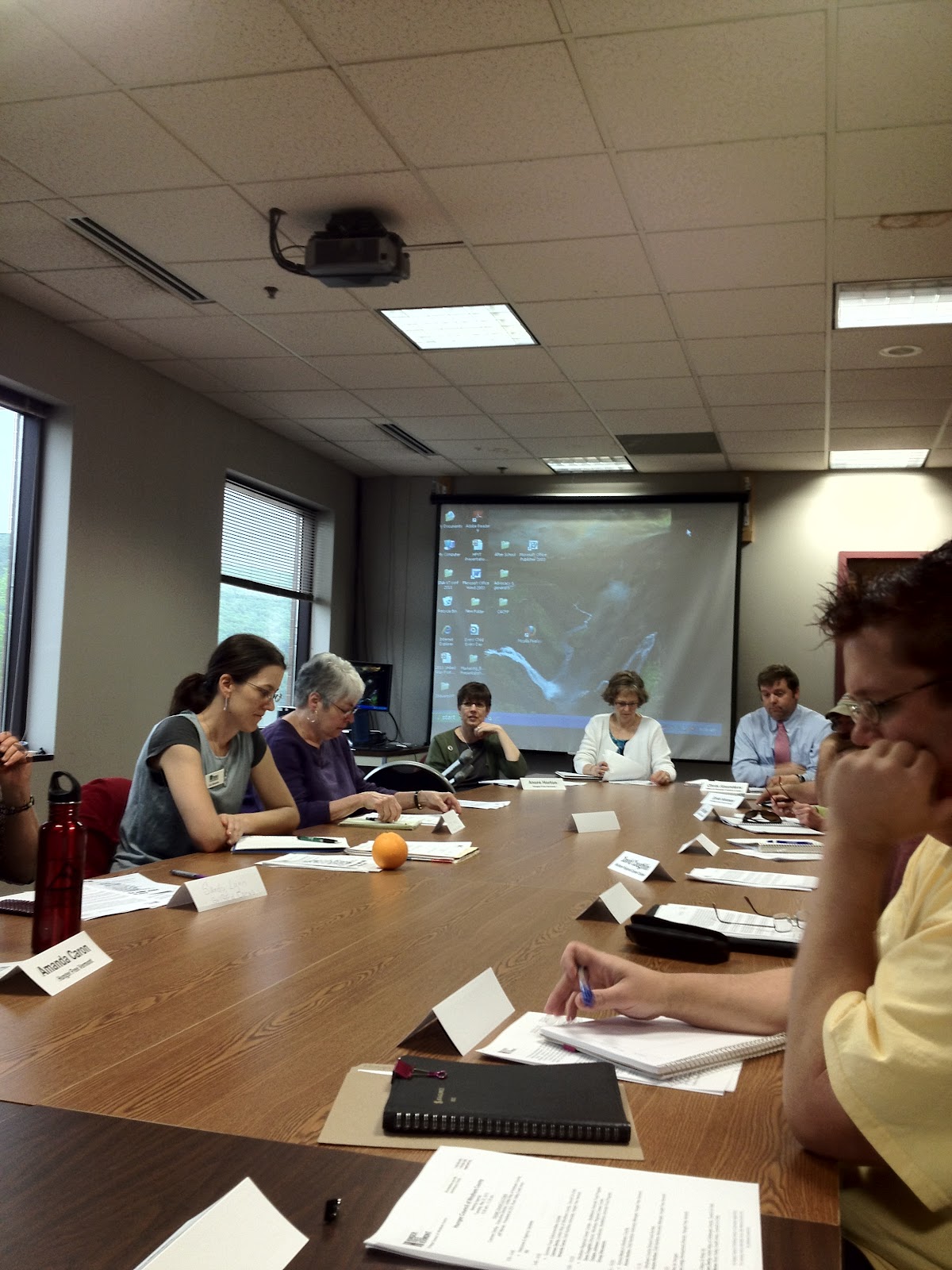
Council members hard at work!


In 2006, Hunger Free VT (then the VT Campaign to End Childhood Hunger) launched the hunger council model.  Hunger councils are an innovative way to rally community members around the issue of hunger, educate our neighbors, and take action.  We now have four hunger councils across VT: the Hunger Council of Washington County, the Hunger Council of Chittenden County, the Hunger Council of the Lamoille Valley, and the Hunger Council of Windham County (shown above).  These councils bring together community leaders from all sectors including: nonprofit organizations, local businesses, legislators, Congressional Delegation staff, communities of faith, and philanthropists.

The results of this community activism have been quite remarkable.  Over the years the councils have helped expand eligibility to 3SquaresVT, improved access to the Child and Adult Care Food Program, and grilled our elected officials on their support for anti-hunger initiatives.  Thanks to the dedication of these volunteers, the hunger councils are now seen as a national model for community activism.

The pictures above are from yesterday's meeting of the Hunger Council of Windham County.  We are particularly proud of their recent accomplishment which prevented the closure of 13 summer food sites throughout the county.  Earlier this year, the Brattleboro Housing Authority announced they would no longer be able to serve as the sponsor for the Summer Food Service Program.  Members of the Hunger Council of Windham County banded together to find a new sponsor so that all children would be served this summer.  Thanks to a dynamic collaboration the group was able to create a new sponsorship program with the Windham Regional Career Center (WRCC).  This program will not only provide food for summer programs but will also provide jobs for 6-8 teens this summer.  Employed teens will have the opportunity to learn food preparation and service skills while providing meals to children in an area where more than 50% receive free and reduced price meals during the school year.  Had WRCC and the Hunger Council of Windham County not stepped up there would have been much more hunger and malnutrition among children this summer.

We can do so much to end hunger and malnutrition when we all come together.  It was a pleasure to spend a morning with the Hunger Council of Windham County and I am grateful for their energy and dedication to their communities.  We hope to one day have hunger councils in all of Vermont's 14 counties!

Read more about the work of the Hunger Council of Windham County in the Brattleboro Reformer.

Thursday, May 10, 2012

Policy Round Table

Ellen Teller from FRAC shares her perspective on anti-hunger
programs and outreach with VT's state leaders

This week we were thrilled to host Ellen Teller, Director of Government Affairs from the Food Research and Action Center and Stephanie Ettinger de Cuba, Research and Policy Director from Children's Health Watch at Hunger Free Vermont.  On Wednesday we hosted a policy round table to glean their perspectives on Vermont's anti-hunger work.  At the table was the Hunger Free Vermont team, staff from our Congressional Delegation, state administrators, UVM researchers, non-profit leaders, and staff from Governor Shumlin's office.  Ellen and Stephanie shared new perspectives to make program advancements in VT.  Many at the table went away with a full list of action steps!  We are grateful to have strong national partners to support our work in ending hunger in all communities.  VT is leading the way in many of our anti-hunger programs, but there is always more we can do to ensure the 1 in 7 Vermonters who are food insecure have the resources they need to feed themselves and their families on a daily basis.

Wednesday, May 2, 2012

Senator Sanders Visits At-Risk, Afterschool Meal Program

Senator Sanders meets with Afterschool Program Coordinators, Food Service Directors,
 and Hunger Free Vermont staff at Flynn Elementary School, Burlington, VT

Senator Sanders; Doug Davis, Director of Burlington School Food Service;
Marissa Parisi & Anore Horton, Hunger Free Vermont

Senator Sanders greets children while they get their meals

Senator Sanders with children in the afterschool program
at Flynn Elementary School in Burlington,VT

Yesterday, Senator Bernie Sanders made a special visit to John J. Flynn Elementary School in Burlington to experience the At-Risk Afterschool Meal program. 

Meals and snacks after school give a nutritional boost to children, including teenagers through age 18, in eligible afterschool programs in lower income areas in Vermont.  In 2009, Senator Sanders was instrumental in adding Vermont as a state to pilot this program which eventually became available to all states in the Healthy Hunger-Free Kids Act of 2010.

When school is out and parents are still at work, children need a safe place to be with their friends, with structured activities, and supportive adults.  Afterschool programs that serve meals and snacks draw children and teenagers in to constructive activities that are safe, fun, and filled with opportunities for learning.  We are thrilled to have this program in Vermont which covers an important nutrition gap for children who are at-risk for hunger.  This program supports children who might not eat dinner until late in the evening when their parents return from work and in some extreme cases it might be the last meal of the day for the 1 in 5 children living in a food insecure households in Vermont.

Hunger Free Vermont has worked hard to recruit schools and afterschool programs to particiate in this program.  The At-Risk Afterschool Meal Program provides meals for children in afterschool programs where over 50% of children in the school district are enrolled in the free and reduced price meals program.  All of the evening meal programs in Vermont include enrichment activities and a chance for children to engage with their peers.  This program is also the first program of its kind to serve teenagers afterschool.  After school hours are the prime risk-taking time for older children and this program helps attract teens to enrichment programs in a supervised environment.

Since the meal program launched at John J. Flynn Elementary School parents, teachers, and children have embraced the opportunity to have children eating a healthy meal after school.  They’ve seen the children participating in this program excited and appreciative for the meals.  This program lessens children’s anxiety by ensuring they have three square meals a day.  We were pleased to have Senator Sanders visit this program and are grateful for his leadership in bringing this program to Vermont.  If your school or afterschool program would like to participate in this program please contact Hunger Free Vermont!

Wednesday, April 25, 2012

Community Leadership


Photos from community meal program in Johnson, VT

At the March 15th Hunger Council of Lamoille Valley meeting, we were pleased to hear from our partners at Johnson State College that they would continue to provide a weekly community meal to the citizens of Johnson.

In March 2008, the Johnson United Church began hosting a weekly community meal to local residents.  Johnson consistently has high rates of poverty and food insecurity when compared to other Lamoille and Vermont communities.  The goal of this program was to provide a free meal for local residents and also build a greater sense of community within Johnson.

While Johnson State College has played the leading role in this program, it has been enthusiastically supported by a number of other organizations, including the United Church of Johnson, Laraway Youth & Family Services, the Lamoille Valley Hunger Coalition, the Johnson Food Shelf, Copley Hospital, WLVB Radio, the Vermont Food Bank, and  the Lamoille County Court Diversion & Restorative Justice programs.
However, in 2010 the program was discontinued and in jeopardy of permanently ending due to lack of resources.  Fortunately, Johnson State College’s ARAMARK Dining Services generously stepped in to continue the program and now provides lunch twice a month to the community.

As part of a contract negotiated with the Vermont State Colleges, in July 2012 a new food service provider, Sodexo, will take over operations at JSC -- and the company has agreed to continue the Johnson Community Meal program. 

The community meal will be provided through ARAMARK through May 9th which is will be a special meal to honor the dedication of volunteers, organizations, and neighbors who have dined at the meal over the past year and a half.  Meals on May 23rd, June 13th, and June 27th will be sponsored by Ian Keller, owner of the HUB, and Meg Loscomb of Lovin’ Cup.  Sodexo will take over the program on June 11th. 

Wednesday, April 18, 2012

Hunger Hits Home


This weekend I watched the documentary Hunger Hits Home produced by our national partner Share Our Strength and the Food Network.  This documentary shares the first hand challenges of parents, children, anti-hunger advocates, educators, and politicians on the frontlines of the battle to end hunger and malnutrition in this country. 

There were many things that struck me in this documentary, but one recurring theme became a symbol to me of what hunger and malnutrition looks like in this country.  Each food insecure family in the film had one main staple available to them on a regular basis: ramen noodles.  Many of us have eaten ramen noodles and enjoyed them.  I ate many packages of them while up late studying in college.  My mom is also a big fan of ramen noodles.  She uses the noodles to make bigger meals by adding frozen vegetables, chicken, and her own seasoning. 
In Hunger Hits Home families talked about eating ramen noodles for breakfast, lunch, and dinner.  One mother fed the noodles to her child and discussed how she longed to feed her children more nutritious food.  A young boy in another family talked about how proud he was that he could help out his dad by cooking the noodles.  These families were able to stave off their hunger with this inexpensive soup, but what is the long term cost of regularly eating food with so few nutrients the body needs?  Most ramen noodle brands are high in sodium and low in nutrients such as calcium, vitamin C, iron, and vitamin A.  What will a ramen noodle diet do to the future of our country?

This summer 47 farmers markets will offer access to 3SquaresVT recipients to purchase fresh fruits and vegetables with their benefits.  Wonderful groups such as the Intervale Center will offer subsidized CSAs to families living on tight budgets.  Summer programs will work to fill the nutrition gap for children.  It will take all of our efforts to ensure that no one in our communities goes hungry or can’t afford enough nutritious food to feed themselves or their families.  We will continue to look to our communities for support so that ramen noodles are only part of our families’ diets and not the main staple at every meal.

Wednesday, April 4, 2012

Hidden Benefits


This past September I read a fascinating Op Ed in the New York Times titled Our Hidden Government Benefits., by Suzanne Mettler.  This piece shared the results of a 2008 poll of 1,400 Americans by the Cornell Survey Research Institute which found that when people were asked whether they “ever used a government social program,” 57% said they had not.  Those surveyed were then asked if they had benefited from 21 different federal programs including: Social Security, unemployment insurance, the home-mortgage-interest deduction, and student loans.  The result was 94% of those who had denied using programs had benefited from at least one, and on average respondents had used four federal programs throughout their lives.

At Hunger Free Vermont we think it is important that everyone understands the importance of the federal nutrition programs within our communities.  Each year over 14 million subsidized meals are served to children in schools, childcare centers, and summer programs thanks to meal reimbursements from the federal government.  At the same time, over $100 million per year is spent in the local economy through food purchases in the 3SquaresVT program.  Nutrition programs along with programs like unemployment insurance and Social Security helped keep families from falling in to poverty during the Great Recession of the last three years.

Our work is to ensure that these programs are used to their greatest capacity and potential within our communities.  We want to ensure that 3SquaresVT recipients are able to use their benefits at local farmers’ markets and grocery stores.  We work to ensure that children are eating the highest quality meals while in the care of their schools or out-of-school programs.  We also believe strongly that government programs are important to respond to peoples needs in tough economic times.  Our government has helped almost all of us at one point or another, and to end hunger we need the help of the community to support the continuation of these programs.  Please continue to visit our website for opportunities to share your voice at the highest levels about the importance of government programs.

Wednesday, March 28, 2012

FY2013 Ryan Budget Proposal Would Increase Hunger in Vermont


Hunger Free Vermont is strongly opposed to the Fiscal Year 2013 budget proposal put forward by Congressman Paul Ryan which will harm the most vulnerable Americans.  This budget proposal would eliminate many services that are needed by Vermont communities and would particularly harm vulnerable and low-income people such as young children, students, older people, the jobless, and the uninsured.  As our economy slowly recovers programs such as 3SquaresVT (known as SNAP nationally) are actively helping people transition back to work and protecting people from the harmful effects of poverty.

This budget would cut SNAP by $122.5 billion over the next ten years by converting the program to a block grant and imposing work requirements.  This would result in millions of low-income families being removed from the program or having their benefits drastically cut, undoubtedly leading to more hunger and poverty during difficult economic times.  This budget also proposes sweeping cuts to other vital programs that serve Vermonters including Head Start, child care, WIC, veteran’s assistance, Community Development Block Grants, and jobs programs.

For decades SNAP has had broad support and has helped ensure the poorest and hungriest people in our nation can put food on the table.  SNAP’s responsiveness to unemployment proved it to be one of the most effective safety net programs during the recent recession, providing families with a stable source of food.  Dismantling this program by converting it to a block grant would make it impossible for the program to respond to vulnerable Americans in their time of need.

At Hunger Free Vermont we support the expansion of programs that put nutritious food on our families’ tables.  There is still time to stand with us to urge Congress to protect SNAP by signing the SNAP Support Letter to Senator Leahy and the Vermont Farm Bill Coalition’s 2012 Recommendations.

Wednesday, February 15, 2012

Strong Coalitions Create Strong Policies

(Meeting of the Vermont Farm Bill Coalition
Fall 2011)

Over the last six months, the Hunger Free Vermont team organized a coalition of organizations to begin drafting recommendations for the 2012 Farm Bill.  Throughout our work on the Healthy, Hunger-Free Kids Act in 2012 we often heard from our Congressional Delegation that it is helpful to have Vermonters speak in one voice when they have like or similar recommendations on policy change.  We took this to heart and decided to work towards a set of common recommendations from Vermont for the reauthorization of the Farm Bill which includes critical nutrition programs such as 3SquaresVT (also know as SNAP or Food Stamps nationally), TEFAP (The Emergency Food Assistance Program), CSFP (Commodity Supplemental Food Program), and the USDA Foods Program which provides food for school meal programs. 

You can see the recommendations and list of the coalition team here.  These meetings have been a testament of why Vermont is so special.  Our plan was to use a consensus model on the recommendations and if any one recommendation had strong opposition we agreed to leave it off the list.  What we found was coalition members listened to each other, moved their stakes when necessary, and have now arrived at a comprehensive list of recommendations to best serve Vermonters.  We are proud to be putting this list of recommendations forward to our Congressional Delegation and are looking for more Vermonters and organizations to sign on.  Please consider joining this team to protect and enhance nutrition programs for our state.